Trapezoid Area Calculator: Area from Two Bases and Height
This trapezoid area calculator turns the two parallel sides (the bases) and the perpendicular height into an area, with no formula to remember. Type into Base 1 (a), Base 2 (b) and Height (h) and the Area card updates on every keystroke; there is no Calculate button. Everything runs in your browser and nothing is uploaded.
Trapezoid Area Formula: A = (a + b) ÷ 2 × h
A trapezoid (called a trapezium in British English) has one pair of parallel sides. The area is the average of those two bases multiplied by the height: Area = (a + b) ÷ 2 × h. The height h is the perpendicular distance between the bases, measured at a right angle to them, not along a slanted side. The note under the three inputs repeats the formula, so it stays in view while you type.
Area of a Trapezoid with Bases and Height: Worked Example
The calculator opens with these three numbers already entered, so you can see a result before typing anything (in cm or inches, depending on your region; change it in the Unit dropdown).
Area = (6 + 10) ÷ 2 × 4 = 8 × 4 = 32 cm²
A second one with decimals: bases of 2.5 and 4.5 and a height of 3 give (2.5 + 4.5) ÷ 2 × 3 = 10.5 square units. A decimal point or a decimal comma both work, and results show up to 4 decimal places with trailing zeros trimmed.
How to Use the Trapezoid Area Calculator
- Pick the Unit your measurements are in: mm, cm, m, in or ft.
- Enter the length of one parallel side in Base 1 (a) and the other in Base 2 (b). The order does not matter.
- Enter the perpendicular distance between them in Height (h).
- Read the Area card, which shows the number with the squared unit, for example 32 cm².
The diagram marks a, b and h on a trapezoid so you can see which sides to measure. Each field needs a positive number: a minus sign cannot be typed, and an empty, zero or non-numeric field shows a dash and "Enter a positive number." instead of an area.
Trapezoid Area in Square Feet, Square Meters or Square Inches
The Unit dropdown offers mm, cm, m, in and ft, and the Area card adds the matching squared unit: mm², cm², m², in² or ft². It is a label, not a converter. All three sides share the selected unit, so measure the bases and the height in the same unit before you type them in. For an area in square feet, measure in feet and choose ft.
Trapezoid Area Without the Height
The formula cannot skip the height, and the length of a slanted side is not the height. A slanted side, the perpendicular height and the sideways offset form a right triangle, so if you know the slanted side and the offset, the Pythagorean theorem gives h. The Pythagorean Theorem Calculator does that step: enter the slanted side and the offset, take the missing side as h, then type it here. For a right-angled corner on the trapezoid, the Right Triangle Solver can also work from an angle. This calculator itself takes only the two bases and the height; it does not use the slanted sides, work out a missing side or give the perimeter.
Trapezoid vs Trapezium
The two names describe the same shape, a four-sided figure with exactly one pair of parallel sides. Trapezoid is the American term and trapezium the British one, and the area formula is the same either way.
Frequently asked questions
What is the formula for the area of a trapezoid?
Area = (a + b) ÷ 2 × h, where a and b are the two parallel sides (the bases) and h is the perpendicular height between them. Add the bases, halve the sum, then multiply by the height. The result is in square units of whatever unit the sides were measured in.
How do you find the area of a trapezoid with bases and height?
Add the two bases, divide by 2 to get their average, then multiply by the height. With bases 6 and 10 and a height of 4: (6 + 10) ÷ 2 = 8, and 8 × 4 = 32. Enter the same three numbers in Base 1 (a), Base 2 (b) and Height (h) and the Area card shows 32 in the unit you picked, for example 32 cm².
Can you find the area of a trapezoid without the height?
Not with the area formula alone: it needs the perpendicular height, the straight-line distance between the two bases, not the length of a slanted side. If you know a slanted side and how far it leans sideways, the Pythagorean theorem gives the height. This calculator takes only the two bases and the height, so work out h first, then enter it.
Can I use all four sides of the trapezoid?
No. This calculator has three inputs: Base 1 (a), Base 2 (b) and Height (h). The two slanted sides are not entered and do not appear in the formula once you know the perpendicular height.
How do you find the area of a trapezoid in square feet?
Measure both bases and the height in feet, choose ft in the Unit dropdown, and enter the three numbers. The Area card shows the result in ft². The Unit dropdown only changes the label, so measure everything in the same unit before you type.
Is a trapezoid the same as a trapezium?
The shape is the same: a four-sided figure with one pair of parallel sides. American English calls it a trapezoid; British English usually calls it a trapezium. The area formula is identical, so this calculator works for either name.
Recommended
-
 Pentel GraphGear 500 Drafting Pencil
Sketch the trapezoid and its height cleanly before you plug the numbers into the formula.
-
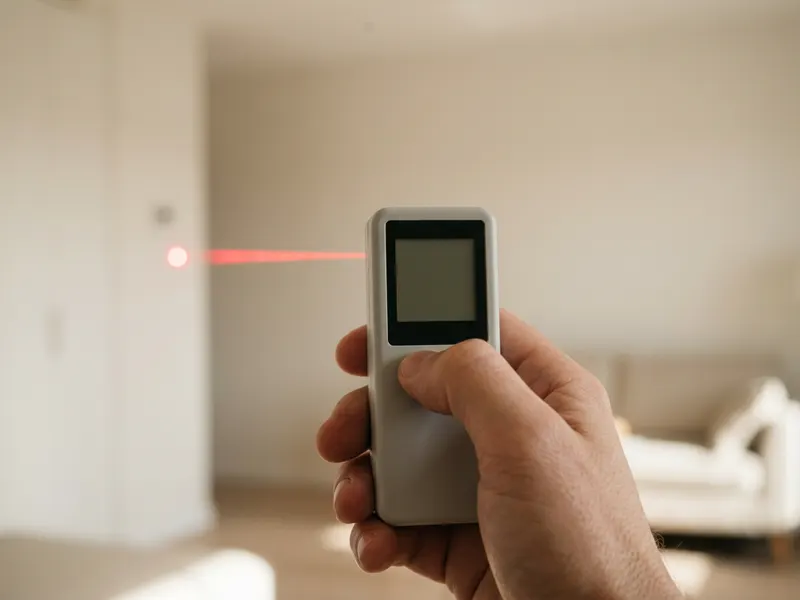 Bosch Blaze Laser Distance Measure
Measure both parallel sides and the height of a sloped plot or panel in seconds.
-
 Texas Instruments TI-30XS MultiView Calculator
Check your worksheet answers by hand, then see how the same sum looks on a real calculator.
Helps keep the tools free. ✨
Images are for illustration only. As an Amazon Associate I earn from qualifying purchases.


