One Rep Max Calculator: Estimate Your 1RM from Any Set
Enter the weight you lifted and the reps you finished, and get an estimated one rep max (1RM) plus the weight at every 5% from 100% down to 50%. You do not have to test a true max: a hard set of a few reps is enough, and the estimate updates as you type.
How to calculate your one rep max
- Type the weight in Weight lifted. Decimals are fine, and the unit (kg or lb) sits at the end of the box.
- Type the number of reps in Reps completed, a whole number from 1 to 30. Use a set taken close to failure for the best estimate.
- Read Estimated 1RM. There is no Calculate button: before you type anything the page says Enter the weight and reps from a recent set to see your estimated one rep max., and after that the result follows every keystroke.
- Scroll down the Training percentages list for the weight at 100%, 95%, 90% and so on down to 50%.
- To change the unit or the maths, select the gear button, Advanced settings, then choose a Unit and a Formula.
An example: you squat 100 kg for 5 reps. With the default Epley formula the unrounded estimate is 116.67 kg, and Estimated 1RM shows 116.5 kg, rounded to the nearest 0.5 kg. The Training percentages list then reads:
| Percent of 1RM | Weight (kg) |
|---|---|
| 100% | 116.5 |
| 95% | 111 |
| 90% | 105 |
| 85% | 99 |
| 80% | 93.5 |
| 75% | 87.5 |
| 70% | 81.5 |
| 65% | 76 |
| 60% | 70 |
| 55% | 64 |
| 50% | 58.5 |
Each row is calculated from the unrounded estimate and then rounded on its own, so a row can differ by half a kilogram from what you would get by taking a percentage of the rounded 1RM. In pounds the rounding is to the whole pound.
How the Training percentages list works
The list is a 1RM percentage chart built from your own numbers rather than a generic table. Heavy singles and doubles live around 90% to 100%. Sets of 3 to 6 reps sit roughly between 80% and 90%, and lighter, higher-rep work falls toward 50% to 70%. Find the percentage you want in your program, then read the weight beside it. If your program says 5 sets at 80%, the 80% row is the bar load to put on.
Going the other way, the formulas show roughly what a set of a given size means. With Epley, 5 reps is about 86% of your 1RM and 10 reps is 75%. With Brzycki, 5 reps is about 89% and 10 reps is also 75%.
Epley, Brzycki, Lombardi, O'Conner or Wathan: choosing a formula
Epley is selected by default. To switch, open Advanced settings and choose from Formula. Each one turns the same two numbers into an estimate in a slightly different way:
| Formula | Calculation |
|---|---|
| Epley | weight × (1 + reps ÷ 30) |
| Brzycki | 36 × weight ÷ (37 − reps) |
| Lombardi | weight × reps0.10 |
| O'Conner | weight × (1 + 0.025 × reps) |
| Wathan | 100 × weight ÷ (48.8 + 53.8 × e−0.075 × reps) |
| Average (Epley + Brzycki) | the mean of the Epley and Brzycki estimates |
For one rep, every formula returns the weight itself. For the same 100 kg set, here is how far they spread as the reps rise:
| Formula | 5 reps | 10 reps | 30 reps |
|---|---|---|---|
| Epley | 116.5 kg | 133.5 kg | 200 kg |
| Brzycki | 112.5 kg | 133.5 kg | 514.5 kg |
| Lombardi | 117.5 kg | 126 kg | 140.5 kg |
| O'Conner | 112.5 kg | 125 kg | 175 kg |
| Wathan | 116.5 kg | 134.5 kg | 183.5 kg |
| Average (Epley + Brzycki) | 114.5 kg | 133.5 kg | 357 kg |
The takeaway is practical. At 5 reps the formulas sit within about 5 kg of each other. At 30 reps they are hundreds of kilograms apart, which is why the estimate is most dependable at about 10 reps or fewer. If you are unsure, keep Epley, or choose Average (Epley + Brzycki) for a figure between the two.
An estimate is not a prescription. Warm up properly, use safety bars or a spotter for heavy attempts, and treat the figure as a starting point for choosing working weights.
Using it for bench press, squat and deadlift
The calculator does not ask which lift you did, because the same formulas are used for a bench press, squat, deadlift, overhead press or leg press. Run it once per lift, using a recent hard set of that lift. Heavy compound lifts with a clear start and finish suit it best.
kg and lb
Open Advanced settings and pick kg or lb under Unit. The unit starts from the region you are visiting from. When you switch, the weight you typed is converted, so 100 kg becomes about 220.5 lb, and the estimate and every training percentage are recalculated. The same 5-rep set at 225 lb with Epley gives an Estimated 1RM of 263 lb.
Limits, messages and privacy
- Weight lifted must be greater than 0; otherwise you see Enter a weight greater than 0.
- Reps completed must be a whole number from 1 to 30; otherwise you see Reps must be a whole number from 1 to 30.
- With 1 rep, Estimated 1RM is the weight you entered.
- The calculation runs on your device. Nothing you enter is uploaded or stored.
If you are planning training, the Max Heart Rate Calculator sets cardio zones the way this one sets strength percentages, and the Macro Calculator estimates daily calories and protein, carbs and fat for a cut or bulk.
Frequently asked questions
How do I calculate my one rep max?
Enter the weight in Weight lifted and the number of reps you finished in Reps completed. The estimated one rep max appears at once as Estimated 1RM, with no Calculate button. With the default Epley formula it is the weight multiplied by 1 plus the reps divided by 30, so 100 kg for 5 reps gives about 116.7 kg, shown as 116.5 kg.
What is a 1RM?
1RM is short for one repetition maximum: the heaviest weight you can lift for a single rep with good form. Testing it directly is tiring and carries more risk than lighter work, so this calculator estimates it from a set of 1 to 30 reps instead.
Are one rep max calculators accurate?
They give an estimate, not a measurement. The result is most reliable when the set was hard and about 10 reps or fewer; beyond that the formulas drift and disagree, Brzycki most of all. Your real max also depends on the lift, your technique and how you feel that day. Use the number to pick working weights and treat a heavy single as a separate decision.
Which 1RM formula is most accurate?
No formula wins for everyone. Epley, Brzycki and Wathan land within a few kilograms of each other at 5 reps, and Epley is the default here. Lombardi and O'Conner come out slightly differently, and Average (Epley + Brzycki) smooths the two most-quoted formulas into one number. Compare them under Formula in Advanced settings and see which spread you are comfortable with.
What is the difference between Epley and Brzycki?
Epley is weight × (1 + reps ÷ 30). Brzycki is 36 × weight ÷ (37 − reps). They agree closely around 8 to 10 reps, but Brzycki climbs much faster at high reps: for 100 kg, 30 reps gives 200 kg with Epley and 514.5 kg with Brzycki. For sets of 5 or fewer the two differ by only a few kilograms.
What percentage of 1RM is 5 reps?
It depends on the formula. With Epley, 5 reps is about 86% of your 1RM; with Brzycki it is about 89%. A set of 10 works out to 75% under both. The Training percentages list shows the weight at every 5% step from 100% down to 50%, so you can see where your own set falls.
Where is the 1RM percentage chart?
It is the Training percentages list under the estimate. It runs from 100% to 50% in 5% steps, each with its weight in your unit, and every row is taken from the unrounded estimate, then rounded to the nearest 0.5 kg or whole lb. It updates when you change the weight, reps, unit or formula.
Can I use it for bench press, squat and deadlift?
Yes. The formulas work on any weight and rep count, so enter the numbers from a bench press, squat, deadlift, leg press or any other lift. There is no lift selector because the calculation is the same for each. Run it separately for each lift, since each has its own max.
Does it work in kg and lb?
Yes. Open Advanced settings and choose kg or lb under Unit. Switching converts the weight you typed, so 100 kg becomes about 220.5 lb, and the estimate and the training percentages follow. The unit starts from your region, and results are rounded to the nearest 0.5 kg or whole lb.
Does it use RPE or reps in reserve?
No. It estimates from the weight and the reps you completed, so enter a set taken close to failure. A set stopped well short of failure will underestimate your max, because the formulas assume you could not have done another rep.
Why are reps limited to 30?
Estimation formulas lose meaning at very high reps, so the Reps completed field accepts whole numbers from 1 to 30. Anything else shows Reps must be a whole number from 1 to 30. A weight of 0 or less shows Enter a weight greater than 0. For a set of 1 rep, the result is simply the weight you lifted.
Is my training data saved or uploaded?
No. The calculation runs on your device. Nothing you enter is uploaded or stored.
Recommended
-
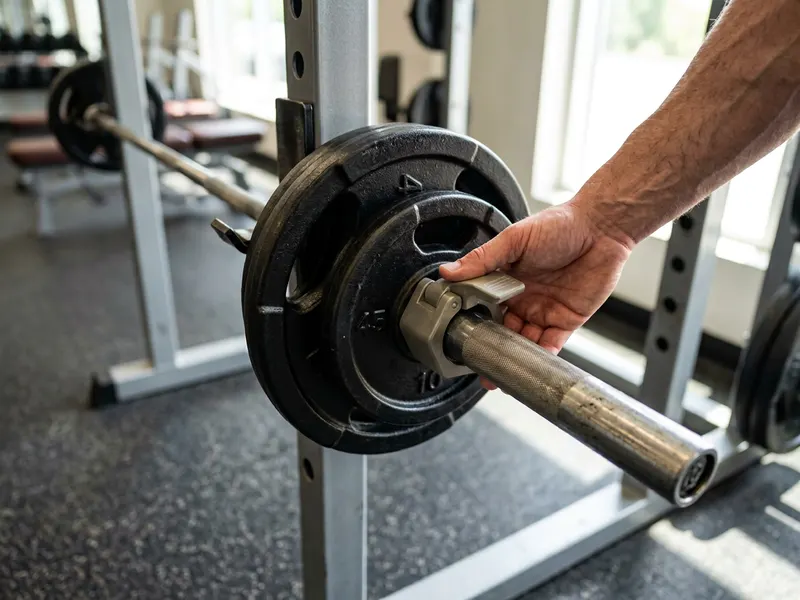 Lock-Jaw Sport Barbell Collars (pair)
Keeps the plates from sliding on the bar when you load up near your estimated max.
-
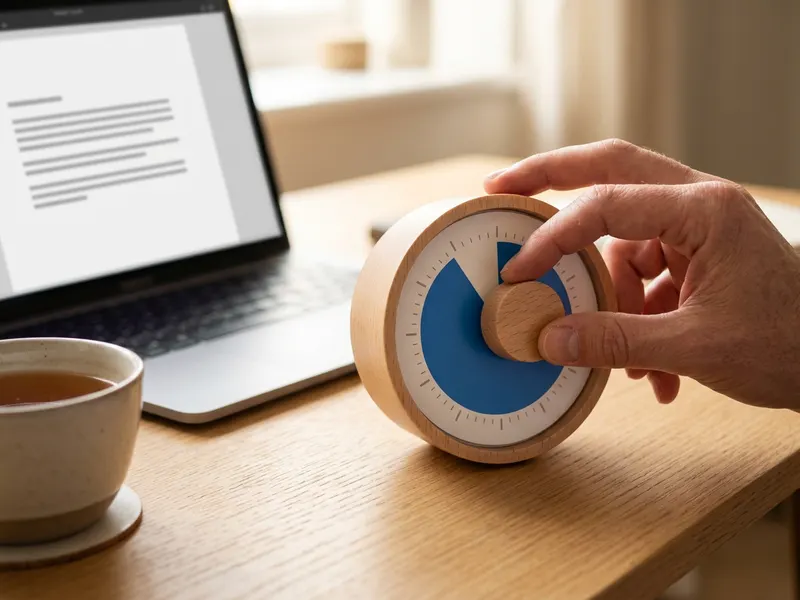 Time Timer 60-Minute Visual Timer
Times your rest between heavy sets so the next one gets a full recovery.
-
 Leuchtturm1917 Dotted Notebook (A5)
Log each lift and the working weights from your list so you can see progress week to week.
Helps keep the tools free. ✨
Images are for illustration only. As an Amazon Associate I earn from qualifying purchases.


