Max Heart Rate Calculator: Formulas and Heart Rate Zones by Age
Enter your age and get an estimated maximum heart rate with five training zones in beats per minute. It uses the Tanaka formula by default and can switch to Fox (220 minus age) or Gellish, build the zones from your resting heart rate with the Karvonen method, or start from a max you measured yourself. Results update as you type.
How to calculate your max heart rate by age
- Type your age into Your age (whole years, 10 to 120). The result appears as you type, so there is no Calculate button.
- Read Estimated max heart rate in bpm. The line under it names the source, such as Tanaka formula.
- Read Training zones: five rows, each with its percentage band and a bpm range.
- To change the method, select Adjust formula (Formula, resting rate, known max) and pick Tanaka, Fox or Gellish. The result and every zone update at once.
Max heart rate formulas: Tanaka, 220 minus age and Gellish
All three formulas predict a population average from age alone. The calculator shows them under Formula, and here is what each gives at common ages:
| Formula | Calculation | Age 20 | Age 30 | Age 40 | Age 50 | Age 60 | Age 70 |
|---|---|---|---|---|---|---|---|
| Tanaka (default) | 208 − 0.7 × age | 194 | 187 | 180 | 173 | 166 | 159 |
| Fox | 220 − age | 200 | 190 | 180 | 170 | 160 | 150 |
| Gellish | 207 − 0.7 × age | 193 | 186 | 179 | 172 | 165 | 158 |
The classic 220 minus age rule drops 1 bpm for every year, while Tanaka and Gellish drop 0.7. That is why Fox gives a higher number than Tanaka under 40, the same number at 40, and a lower one above it. Tanaka and Gellish differ by about 1 bpm at any age. Tanaka's equation is generally considered a better fit than 220 minus age for adults, which is why it is the default, and the older rule stays as a familiar baseline.
Treat any of these as a starting point. Individual maximums often sit 10 bpm or more away from the formula, and fitness level, genetics and medication all move the real number.
The five heart rate zones and their bpm ranges
Zones are percentages of max. For age 40 with the default Tanaka formula (max 180 bpm), the rows read:
| Zone | Name in the tool | % of max | bpm at max 180 |
|---|---|---|---|
| Zone 1 | Warm-up | 50–59% | 90–106 |
| Zone 2 | Easy (fat burn) | 60–69% | 108–124 |
| Zone 3 | Aerobic | 70–79% | 126–142 |
| Zone 4 | Anaerobic | 80–89% | 144–160 |
| Zone 5 | VO2 max | 90–100% | 162–180 |
The one or two bpm between the end of one zone and the start of the next is rounding: each band is a whole percentage, and each limit is rounded to a whole beat. The names are common labels from gym charts and sports watches. Brands draw the bands a little differently, so use the zone you plan to train in as your reference and check which percentages your own watch uses.
Heart rate zones with the Karvonen method (resting heart rate)
Percent of max ignores how fast your heart beats at rest. The Karvonen method uses heart rate reserve, your max minus your resting rate, and adds the resting rate back to each zone limit: reserve × percentage + resting rate.
To use it, select Adjust formula and enter a value from 30 to 120 bpm in Resting heart rate (optional). The zone rows then read % of reserve and the note under them says the zones use the Karvonen method. Example: age 40, Tanaka max 180, resting rate 60, so the reserve is 120 bpm.
| Zone | % of reserve | bpm |
|---|---|---|
| Zone 1 Warm-up | 50–59% | 120–131 |
| Zone 2 Easy (fat burn) | 60–69% | 132–143 |
| Zone 3 Aerobic | 70–79% | 144–155 |
| Zone 4 Anaerobic | 80–89% | 156–167 |
| Zone 5 VO2 max | 90–100% | 168–180 |
Karvonen zones start higher than percent-of-max zones for the same person (Zone 1 begins at 120 bpm here, against 90). If the resting rate you enter is as high as the max, the calculator tells you and falls back to percent of max.
Use your own measured max heart rate
If you have a figure from a lab test or a field test, enter it in Known max heart rate (optional), from 100 to 250 bpm. It replaces the formula, your age is no longer needed, and the result is labelled Your own measured max. The zones are built from it exactly as before. A maximal effort test is hard work, so people with a heart condition or little exercise experience should do one only with medical supervision.
Put the zones into your watch or training plan
Copy the bpm ranges into whatever you train with. Most sports watches and cycling computers let you set a max heart rate, often a resting rate too, or type in custom zone limits. Entering the numbers from here keeps your device's zones in line with the plan you wrote down. Different devices build zones in different ways, so look up whether yours uses percent of max or heart rate reserve and pick the matching setting in this calculator.
Limits and what this calculator does not do
- Age (10 to 120), or your own measured max (100 to 250 bpm), is the only thing that sets the max. Sex, weight, fitness level and medication are not inputs.
- The results are population-based estimates, not medical advice. Real maximums vary from person to person, and you should check with a doctor before hard training, especially if you have a heart condition.
- It does not read a heart rate monitor and does not save your numbers.
- The calculation runs in your browser. Nothing you enter is uploaded.
Frequently asked questions
How do I calculate my max heart rate?
Type your age into Your age. The calculator applies the Tanaka formula, 208 − 0.7 × age, and shows Estimated max heart rate in bpm with your five training zones underneath. To use another method, select Adjust formula and choose Fox (220 − age) or Gellish (207 − 0.7 × age).
What is the max heart rate for a 40 year old?
The estimate is 180 bpm with Tanaka, 180 bpm with Fox (220 − age) and 179 bpm with Gellish. A 30 year old gets 187, 190 and 186 bpm, and a 50 year old gets 173 bpm with Tanaka. Real maximums vary from person to person.
Is 220 minus age accurate?
It is a rough average, not a measurement. It falls 1 bpm for every year of age, while Tanaka falls 0.7 bpm a year, so the two agree at 40 and drift apart at other ages: at 20 the rule gives 200 and Tanaka 194, at 60 it gives 160 and Tanaka 166. Individual maximums often sit 10 bpm or more from either figure.
What is the most accurate max heart rate formula?
No formula is accurate for everyone, because each one predicts an average from age alone. Tanaka (208 − 0.7 × age) is generally considered a better fit for adults than 220 − age and is this calculator's default. The only accurate figure is one measured in a supervised maximal test, which you can enter under Known max heart rate (optional).
What is the Tanaka formula for max heart rate?
Tanaka's formula is 208 − 0.7 × age, rounded to a whole number. For a 50 year old that is 208 − 35 = 173 bpm. It is the default here and is labelled Tanaka formula under the result.
How do I calculate heart rate zones with the Karvonen method?
Open Adjust formula and enter Resting heart rate (optional). Heart rate reserve is your max minus your resting rate, and each zone limit is reserve × percentage + resting rate. For a 40 year old with a resting rate of 60 bpm, the reserve is 120 and Zone 2 runs from 132 to 143 bpm. The zone rows then read % of reserve.
What is heart rate reserve?
Heart rate reserve is the gap between your maximum and your resting heart rate. With a max of 180 and a resting rate of 60 it is 120 bpm. The Karvonen method takes a percentage of that gap and adds the resting rate back.
What are the five heart rate zones?
Zone 1 Warm-up is 50–59% of max, Zone 2 Easy (fat burn) 60–69%, Zone 3 Aerobic 70–79%, Zone 4 Anaerobic 80–89% and Zone 5 VO2 max 90–100%. For a max of 180 bpm, Zone 2 is 108–124 bpm. Watch and gym-chart brands draw the bands slightly differently.
Is max heart rate different for men and women?
This calculator asks for age only. Tanaka's equation was fitted to adults of both sexes, and age was the main factor on average. Some researchers have proposed separate equations for women, and this calculator does not include one. If you know your own number from a test, enter it under Known max heart rate (optional).
Can I enter my own measured max heart rate?
Yes. Under Adjust formula, enter it in Known max heart rate (optional), from 100 to 250 bpm. It replaces the formula, the age is no longer needed, and the result is labelled Your own measured max.
Do these formulas work if I take beta blockers?
Not reliably. Medicines that slow the heart, such as beta blockers, lower your real maximum, so an age-based estimate can be too high. This calculator has no medication setting. Ask your doctor which heart rate targets suit you.
Is my age uploaded anywhere?
No. The calculation runs in your browser and nothing you enter is uploaded or saved.
Recommended
-
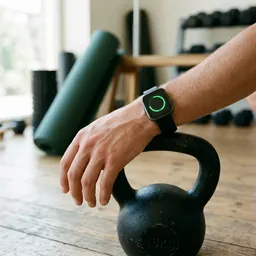 Amazfit Bip 6 Smartwatch
A low-cost watch that shows your live bpm, so you can stay inside the zones you just worked out.
-
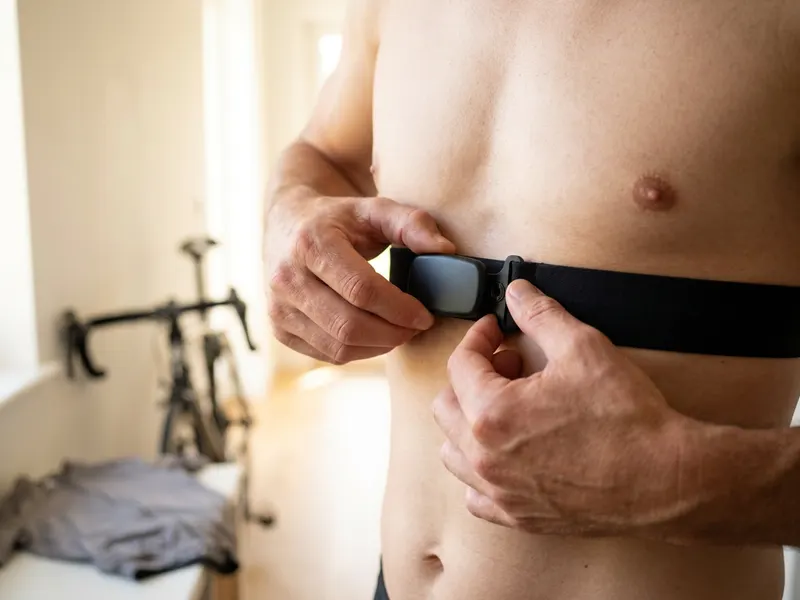 Polar H10 Heart Rate Chest Strap
A chest strap reads heart rate more accurately than a wrist sensor, which matters when you are holding a zone boundary.
-
 Garmin Forerunner 165 Running Watch
Load your zones into a running watch and it tells you when you drift above or below your target range.
Helps keep the tools free. ✨
Images are for illustration only. As an Amazon Associate I earn from qualifying purchases.


