RPE Calculator: Estimate 1RM and Target Weights from RPE
This RPE calculator turns one set, the weight you lifted, the reps and how hard it felt, into an estimated one-rep max (1RM) and a table of target weights for 1 to 12 reps at RPE 7, 8, 9 and 10. It uses the Reactive Training Systems (RTS) RPE chart by default, so it also works as an RPE to percentage converter. It updates as you type, runs in your browser and nothing you enter is uploaded.
How to Calculate 1RM from RPE
- Type the Weight lifted for your set. The tag beside the box shows the unit, kg or lb.
- Choose Reps, from 1 to 12. 5 is preselected.
- Choose your RPE: 6.5, 7, 7.5, 8, 8.5, 9, 9.5 or 10. 8 is preselected. The hint under the buttons reads 10 = no reps left, 9 = one left, 8 = two left.
- Read Estimated 1RM, the large number, with the name of the formula under it.
- Read the Target weights table below it. Each row is a number of reps, each column is RPE 7, RPE 8, RPE 9 or RPE 10, and each cell is the weight to lift for that many reps at that RPE. When your own RPE is 7, 8, 9 or 10, the cell that matches your set is highlighted.
- To change the chart, the unit or the rounding, press the gear button Formula, unit and rounding and set Formula, Unit and Round to.
There is no submit button. Change the weight, the reps or the RPE and every number updates at once.
Formula: RTS RPE chart, Round to: 2.5 kg
Share of 1RM for 5 reps at RPE 8: 81.1%
Estimated 1RM = 100 / 0.811 = 123.3, shown as 122.5 kg
Target weights: 5 reps at RPE 7 = 97.5, 5 reps at RPE 8 = 100, 3 reps at RPE 9 = 110, 1 rep at RPE 10 = 122.5
RPE to Percentage Chart (RTS)
Every cell in the target table is your estimated 1RM multiplied by a percentage from the RTS RPE chart (Mike Tuchscherer, Reactive Training Systems). Here is that chart for RPE 7 to 10, as a percentage of 1RM. RPE 6.5, 7.5, 8.5 and 9.5 sit halfway between the whole RPE columns, and you can choose them as your RPE.
| Reps | RPE 7 | RPE 8 | RPE 9 | RPE 10 |
|---|---|---|---|---|
| 1 | 89.2% | 92.2% | 95.5% | 100.0% |
| 2 | 86.3% | 89.2% | 92.2% | 95.5% |
| 3 | 83.7% | 86.3% | 89.2% | 92.2% |
| 4 | 81.1% | 83.7% | 86.3% | 89.2% |
| 5 | 78.6% | 81.1% | 83.7% | 86.3% |
| 6 | 76.2% | 78.6% | 81.1% | 83.7% |
| 7 | 73.9% | 76.2% | 78.6% | 81.1% |
| 8 | 70.7% | 73.9% | 76.2% | 78.6% |
| 9 | 68.0% | 70.7% | 73.9% | 76.2% |
| 10 | 65.3% | 68.0% | 70.7% | 73.9% |
| 11 | 62.6% | 65.3% | 68.0% | 70.7% |
| 12 | 59.9% | 62.6% | 65.3% | 68.0% |
The columns are linked by reps in reserve. RPE 8 for 5 reps (81.1%) is the same percentage as RPE 10 for 7 reps, because two reps were left in the tank. That is why RPE 10 for 1 rep is 100%, your 1RM itself.
What RPE Means in Lifting
RPE is rate of perceived exertion, a 1 to 10 rating of how hard a set was. In lifting it is tied to how many more reps you could have done: RPE 10 is a maximal set with nothing left, RPE 9 leaves one rep, RPE 8 leaves two and RPE 7 leaves three. Reps in reserve (RIR) counts the same thing the other way round, so RPE = 10 minus RIR. The calculator accepts 6.5 to 10 in half steps. This is the 1 to 10 lifting scale, not the Borg 6 to 20 scale used for running and heart rate.
RTS, Epley or Brzycki: Which Formula to Choose
RTS RPE chart is the default and reads the table above directly. Epley and Brzycki are common rep-max formulas that know nothing about RPE, so the calculator adds your reps in reserve to your reps first. With n = reps + (10 - RPE), Epley gives 1RM = weight x (1 + n / 30) and Brzycki gives 1RM = weight x 36 / (37 - n). A count of 1 or fewer is the 1RM itself. The table of target weights uses the same formula as the 1RM, so switching it changes every cell.
| Formula | Reps used | 1RM for 100 kg x 5 at RPE 8 |
|---|---|---|
| RTS RPE chart | 5 reps at RPE 8 = 81.1% | 122.5 kg |
| Epley | n = 7 | 122.5 kg |
| Brzycki | n = 7 | 120 kg |
Results are rounded to the plate jump chosen in Round to, 2.5 here. The three formulas agree closely on this set and drift further apart on high-rep sets at lower RPE.
Units and Rounding
Unit starts as kg or lb from your region. Switching it converts the weight you typed, so your set carries over. Round to offers 1, 2.5 or 5 in the chosen unit, with 2.5 as the default. Every cell is worked out from the unrounded 1RM and rounded once, so rounding never builds up from one cell to the next. The Estimated 1RM is rounded to the same step.
The result is an estimate for planning, not a prescription. The chart is an average, and your own RPE, the lift and your fatigue all shift the real numbers. Treat the targets as a starting point and adjust to how the bar moves. This is not coaching or medical advice.
Frequently Asked Questions
How do you calculate 1RM from RPE?
Look up the share of your 1RM that your reps and RPE represent, then divide the weight you lifted by it. On the RTS chart, 5 reps at RPE 8 is 81.1%, so 100 kg for 5 reps at RPE 8 gives 100 / 0.811 = 123.3 kg. The calculator does this as you type and rounds the Estimated 1RM to your Round to step, so with the default of 2.5 it shows 122.5 kg.
What is RPE in lifting?
RPE is rate of perceived exertion: a rating from 1 to 10 of how hard a set was, based on how many more reps you could have done. RPE 10 means no reps left, RPE 9 means one left and RPE 8 means two left. This calculator accepts RPE 6.5 to 10 in half steps.
How do you convert RPE to percentage?
The percentage depends on both the RPE and the number of reps. Find your reps in the left column of the RPE to percentage chart above and read across to the RPE column: 3 reps at RPE 9 is 89.2% of your 1RM and 8 reps at RPE 7 is 70.7%. The calculator shows weights rather than percentages, and the chart gives you the percentages behind them.
What percentage of 1RM is RPE 8?
It depends on the reps. On the RTS chart RPE 8 is 92.2% of your 1RM for 1 rep, 86.3% for 3 reps, 81.1% for 5 reps and 73.9% for 8 reps. There is no single percentage for RPE 8, because a heavier set leaves fewer reps in reserve at the same effort.
What is the difference between RPE and RIR?
RIR is reps in reserve, the number of reps you had left. RPE 10 is 0 RIR, RPE 9 is 1 RIR, RPE 8 is 2 RIR and RPE 7 is 3 RIR, so RPE = 10 - RIR. They describe the same effort on two scales. The calculator uses this link: it reads RPE 8 as two reps in reserve.
Which formula should I choose: RTS RPE chart, Epley or Brzycki?
The RTS RPE chart is the default and the only one of the three built around RPE. Epley and Brzycki are rep-max formulas with no RPE term, so the calculator first adds your reps in reserve (10 minus RPE) to your reps: 5 reps at RPE 8 is treated as 7 reps to failure. For 100 kg x 5 at RPE 8 with Round to 2.5 kg, RTS gives 122.5 kg, Epley 122.5 kg and Brzycki 120 kg. Use the one your programme or coach uses.
How accurate is an RPE calculator?
It is an estimate for planning, not a measurement. The chart is an average, and how well you judge reps in reserve, the lift and your fatigue all move the real number. Use the result as a starting point and adjust it to how the bar actually moves. It is not coaching or medical advice.
Can I use the RPE calculator for squat, bench press and deadlift?
Yes. The calculator does not ask which lift it is, so one set from any barbell lift gives targets for that lift. The chart is an average across lifts, so the real percentages can differ a little between a squat, a bench press and a deadlift. Enter a set from the lift you want targets for.
Does the RPE calculator work in pounds and kilograms?
Yes. Open Formula, unit and rounding and choose lb or kg under Unit. It starts from your region and converts the weight you already typed when you switch. Round to offers 1, 2.5 or 5 in the unit you chose, so you can match the smallest plate jump you can load.
Recommended
-
 Leuchtturm1917 Dotted Notebook (A5)
Log each set's weight, reps and RPE so next week's targets start from real numbers.
-
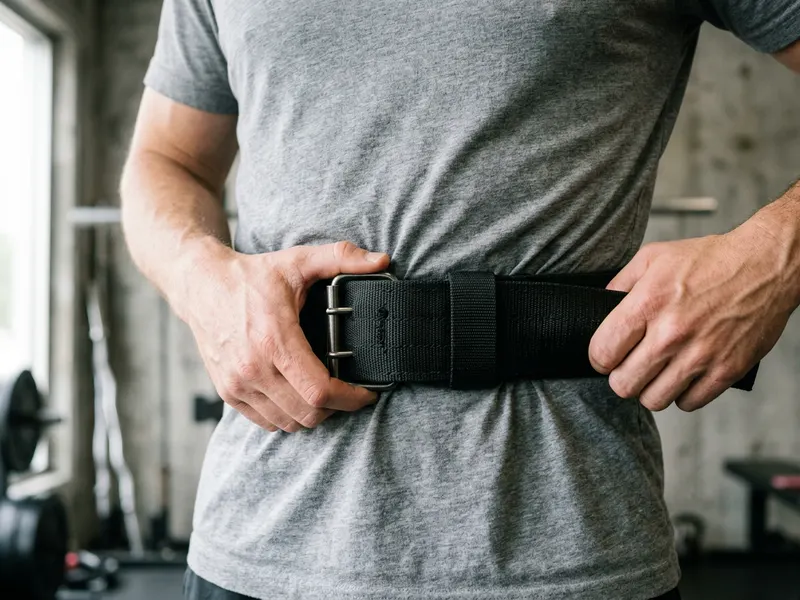 Element 26 Self-Locking Lifting Belt
Cinch it tight for the 1RM-range singles and heavy sets the grid just gave you.
-
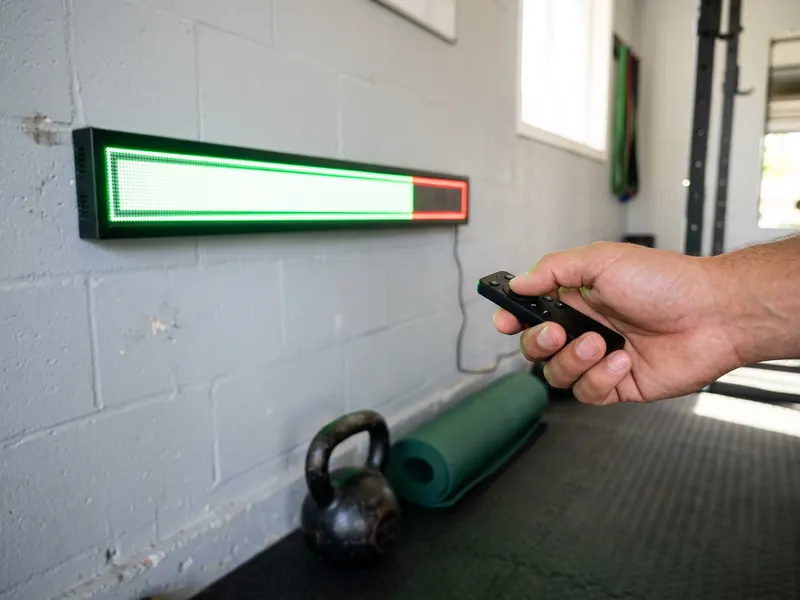 LUCORB Wall Gym Timer with Remote
Time your 3 to 5 minute rests between top sets with a clock you can read from the rack.
Helps keep the tools free. ✨
Images are for illustration only. As an Amazon Associate I earn from qualifying purchases.


