Paper Weight Converter: GSM to lb and Points
Type one weight above and this paper weight converter shows it as GSM, as pounds in every US grade (bond, text, cover, index and tag), and as an estimated caliper in points. It updates as you type, and nothing you enter leaves your browser.
How to convert paper weight between GSM, lb and points
There is no convert button. Fill in two fields and the results change with every edit:
- Paper weight: the number printed on the ream or spec sheet, such as 80 or 216.
- Unit and paper grade: GSM, lb Bond / Writing, lb Text / Book, lb Cover, lb Index, lb Tag or Points (caliper).
The big figure is the Universal weight in grams per square meter. Below it, the grid gives the same paper as pounds for each grade, plus a dashed Caliper ≈ cell with the estimated thickness in points. Show common examples says what paper of that weight is usually used for.
Why "lb" alone does not tell you a paper's weight (bond, text, cover, index, tag)
US paper is rated by the weight of a 500-sheet ream of the grade's own basic sheet size, so the same pound number means different paper in different grades. 80 lb text is a light book paper at about 118 GSM, while 80 lb cover is a stiff card at about 216 GSM. That is why the unit list always names the grade. Converting to GSM first puts every grade on one scale.
Common paper weights in GSM and pounds
24 lb bond = 90 GSM (premium printer paper)
80 lb text = 118 GSM (brochure and book paper)
100 lb text = 148 GSM (heavy brochure paper)
65 lb cover = 176 GSM (light cardstock)
80 lb cover = 216 GSM (cardstock for cards and menus)
100 lb cover = 270 GSM (heavy cardstock)
110 lb index = 199 GSM (index cards)
100 lb tag = 163 GSM (tag stock)
GSM vs lb vs points: what each one measures
GSM is mass per area, the same everywhere in the world. Pounds are the mass of a ream of one grade's basic size, so they only compare within a grade. Points are thickness, not weight: one point is 0.001 inch. Two papers of equal GSM can differ in points, because coated, dense stock is thinner than bulky uncoated stock. The caliper shown here is an estimate for typical uncoated paper.
Frequently asked questions
How do I convert GSM to lb paper weight?
Pick the paper grade first, because pounds depend on it. The formula is lb = GSM × basis area ÷ 1406.5, where the basis area is 374 for bond, 950 for text, 520 for cover, 777.75 for index and 864 for tag. For 216 GSM that gives about 80 lb cover or 146 lb text. The converter shows every grade at once.
What is 100 lb cover in GSM?
100 lb cover is about 270 GSM. The formula is 100 × 1406.5 ÷ 520 = 270.5. The same 270 GSM sheet is roughly 72 lb bond or 182 lb text, which is why the grade name matters.
What is 100 lb text paper in GSM?
100 lb text is about 148 GSM (100 × 1406.5 ÷ 950). That is a fairly heavy book or brochure paper, noticeably lighter than 100 lb cover, which is about 270 GSM.
How many GSM is 20 lb bond paper?
20 lb bond is about 75 GSM (20 × 1406.5 ÷ 374). It is the usual weight of everyday printer paper. 24 lb bond comes to about 90 GSM.
How do I convert paper gsm to pt (points)?
Choose GSM as the unit, type the weight, and read the Caliper cell. Points are thousandths of an inch of thickness, so 10 pt is 0.010 in. The tool's figure is an estimate for typical uncoated paper, because coating, finish and the manufacturer all change real thickness. For an exact figure, check the mill's spec sheet.
Why is paper weight in lbs different for bond, text and cover?
A pound rating is the weight of 500 sheets of that grade's basic sheet size, and each grade has a different basic size: 17 × 22 in for bond, 25 × 38 in for text, 20 × 26 in for cover. A larger basic sheet weighs more per ream, so 80 lb text is much lighter paper than 80 lb cover. GSM removes the confusion because it is the same for every grade.
Recommended
-
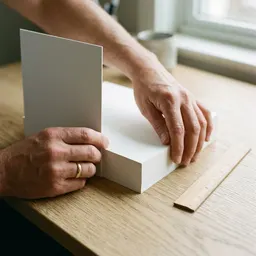 Neenah 80 lb White Cover Cardstock (255 sheets)
The 80 lb cover weight you just converted, ready for cards and invitations
-
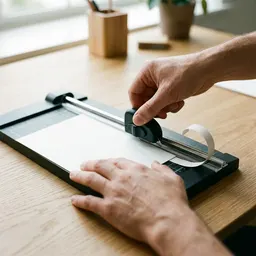 Fiskars SureCut 12" Paper Trimmer
Cut heavy cardstock to size with a clean straight edge
-
 Classic Crest 80 lb Cover, Solar White (250 sheets)
A premium cover stock for print jobs that need to feel substantial
Helps keep the tools free. ✨
Images are for illustration only. As an Amazon Associate I earn from qualifying purchases.