Bike Tire Pressure Calculator
This free bike tire pressure calculator turns your total system weight, tire width, and surface into a specific front and rear PSI (and BAR) recommendation instead of a generic chart. Enter your numbers above and both results recalculate instantly as you type — nothing is uploaded, and there's no account to create.
How to Find Your Ideal Bike Tire Pressure by Weight
Enter your total system weight — you, the bike, and any gear or hydration you're carrying — in the unit you prefer, then switch lb or kg at any time without losing your number. A heavier system weight always calculates a higher pressure for the same tire, because more weight needs more air to keep the tire from bottoming out against the rim. Type your tire width next — the number printed on the sidewall, in millimeters — and pick Road, Gravel, or MTB to match your terrain. The Front and Rear cards above update the moment any of the three changes, in both PSI and BAR.
Road, Gravel, and MTB Pressure Guidelines
Surface changes the calculation because the tradeoff it's balancing is different on each one — a smooth road wants low rolling resistance and can run firmer, while gravel and MTB need the tire to flex into a loose or bumpy surface for traction, so they run softer at the same weight and width.
| Surface | Typical range | What it's balancing |
|---|---|---|
| Road | ~60-100 PSI | Rolling resistance vs. comfort and grip |
| Gravel | ~25-45 PSI | Rim protection vs. traction on loose surfaces |
| MTB | ~18-30 PSI | Traction and comfort vs. rim strikes |
These are starting ranges — your exact number depends on weight and tire width too, which is what the calculator above works out for you.
Tubeless vs. Tubed Tire Pressure
Open Advanced settings and switch Setup to Tubeless to see a lower recommended pressure than the same tire run with a tube. Without a tube there's no risk of a pinch flat — the classic failure where the tube gets caught and punctured between the tire and rim on a hard hit — so a tubeless tire can run softer for more grip and comfort while still protecting the rim. The Casing toggle in the same panel nudges the result further: a supple, thinner casing can run slightly lower, while a reinforced, puncture-resistant casing wants slightly more air to feel equivalent.
Why Front and Rear Tire Pressure Differ
The rear tire always calculates a higher pressure than the front for the same bike. On a typical riding position more of your weight sits over the rear wheel, so the rear tire needs more air to carry that extra load without bottoming out — the front, carrying less weight, can run softer for a bit more grip and shock absorption where it matters most for steering and braking control.
Frequently Asked Questions
What PSI should my bike tires be?
It depends on your total system weight (you + the bike + any gear), your tire width, and the surface you ride. A heavier rider or a narrower tire needs more pressure to avoid pinch flats and rim strikes; a lighter rider or a wider tire needs less to keep grip and comfort. Enter your numbers above and the calculator gives you a specific front and rear PSI instead of a generic range.
What PSI should my road bike tires be?
Most road tires land somewhere between about 60 and 100 PSI, with narrower 23-25mm tires toward the top of that range and wider 28-32mm tires toward the bottom — modern road guidance favors lower pressure on wider tires for more grip and comfort with no real rolling-resistance penalty. Select Road above and enter your weight and tire width for an exact number rather than a wide range.
What PSI should gravel bike tires be?
Gravel tires typically run lower than road, often 25-45 PSI depending on tire width and terrain — enough to protect the rim on rocky sections without so much that the tire skips across loose surfaces. Select Gravel above; a wider gravel tire at the same weight will always calculate a lower number than a narrower one.
How much air should be in my gravel bike tires?
Enough to keep the tire from bottoming out on rocks and roots, but soft enough that the tread can flex into loose gravel for traction — for most riders and tire widths that lands in the 25-45 PSI band. The calculator above accounts for your specific weight and tire width rather than a single blanket number, and tubeless setups can usually run a bit lower still.
What's the tire pressure formula for mountain bikes?
MTB pressure has to balance traction against rim protection, so it runs much lower than road or gravel — commonly 18-30 PSI, with wider tires and tubeless setups toward the bottom of that range. The calculator above weighs your system weight against your tire width and the MTB surface factor to give a specific front and rear number instead of a rule of thumb.
Recommended
-
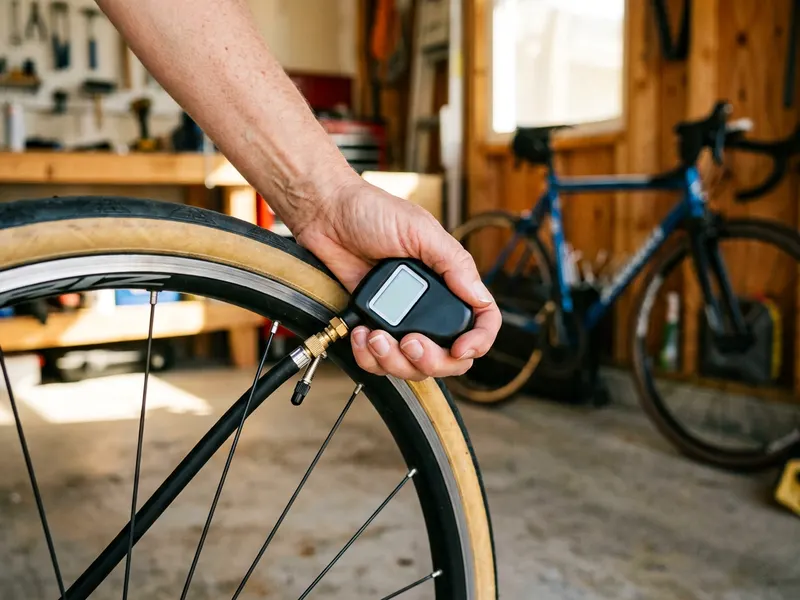 Topeak SmartGauge D2 Digital Gauge
Check you've hit your calculated PSI exactly, on Presta or Schrader.
-
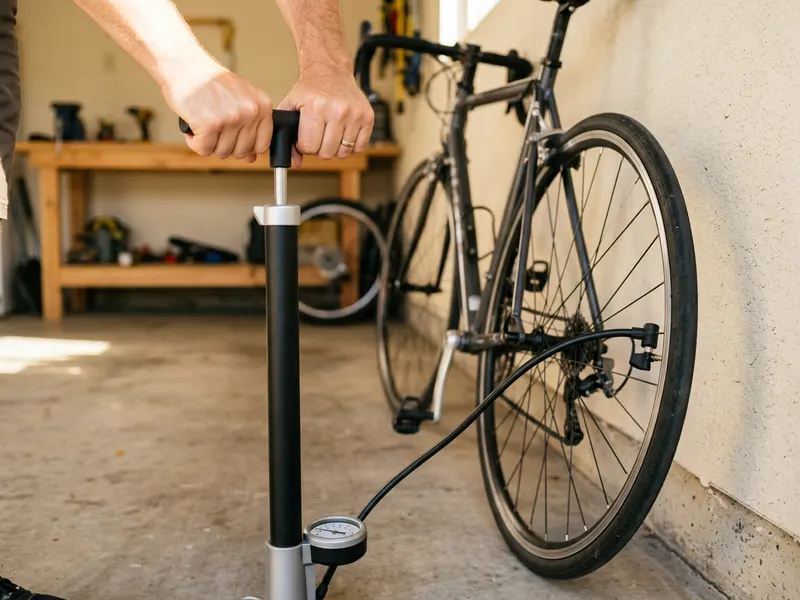 Topeak JoeBlow Sport III Floor Pump
Big gauge and steady strokes to pump both tires to the right number.
-
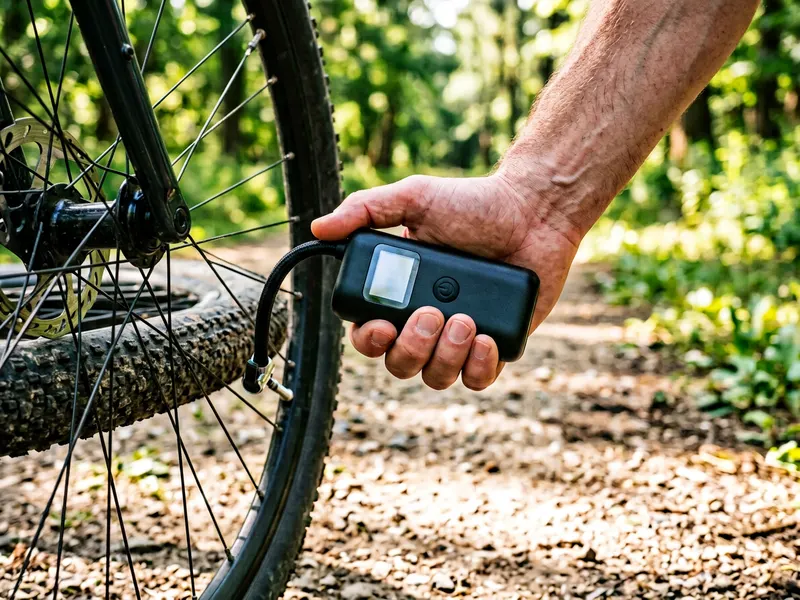 Fanttik X9 Ace Electric Bike Pump
Set the PSI, press start and it stops on its own; small enough for a jersey pocket.
Helps keep the tools free. ✨
Images are for illustration only. As an Amazon Associate I earn from qualifying purchases.