Sunrise and Sunset Times by Location
See today's sunrise and sunset times for where you are, or for any date and any coordinates, with the hours of daylight and the full dawn-to-dusk timeline: solar noon and three stages of twilight on each side.
How to Find Sunrise and Sunset Times
- Leave Date on today, or pick another day.
- Allow location access when the browser asks. The Solar timeline fills in straight away.
- If you deny the prompt or location is unavailable, type your Latitude and Longitude in decimal degrees (for example 35.68 and 139.77).
- Read the big Daylight figure for the hours and minutes of sunlight, then the times below it.
There is no button to press: the result updates as you change the date or the coordinates.
Sunrise and Sunset Times for Any Coordinates or Destination
If your location was granted, press Enter coordinates to type a different place, such as a trip destination or a campsite, and Use my location to switch back. Latitude runs from -90 to 90 and longitude from -180 to 180.
One thing to know: times are shown in your device's time zone, as the tool's note says. For a remote place they are therefore in your clock time, not that place's. Add or subtract the time difference to get its local clock time.
How Many Hours of Daylight Today?
The Daylight hero shows hours and minutes between sunrise and sunset, such as 11:15 under Hours and minutes of sunlight. Move the Date forward or back to see the days lengthen and shorten through the year. Near the poles the note changes to The sun does not set on this date. or The sun does not rise on this date.
The Solar Timeline: Dawn, Solar Noon and Dusk
The Solar timeline lists nine moments in order of the day:
| Row | What it marks |
|---|---|
| Astronomical dawn | Sun 18 degrees below the horizon; the sky begins to lighten |
| Nautical dawn | Sun 12 degrees below; the horizon becomes visible |
| Civil dawn | Sun 6 degrees below; enough light for outdoor activity |
| Sunrise | Top edge of the sun meets the horizon |
| Solar noon | Sun at its highest point |
| Sunset | Sun drops below the horizon |
| Civil dusk | Sun 6 degrees below, after sunset |
| Nautical dusk | Sun 12 degrees below, after sunset |
| Astronomical dusk | Sun 18 degrees below; the sky is fully dark |
A moment that never happens on that date, such as the sky not getting fully dark in a northern summer, shows Does not occur.
How Accurate Are the Times?
Typically within about a minute at mid latitudes. Sunrise and sunset use the standard definition with the sun's center 0.833 degrees below the horizon. The calculation does not include terrain, elevation or day-to-day changes in atmospheric refraction, so a hilltop or a valley can see the sun a little earlier or later. It uses no weather data and does not show golden hour or blue hour.
Private by Design
The positions are worked out on your device with the SunCalc library. Your location and coordinates are never uploaded, and there is no account.
Sunrise and Sunset Times FAQ
How do I find sunrise and sunset times for my location?
Allow location access when your browser asks and the Solar timeline fills in for today. Pick another day in Date to see any other date. If you deny the prompt, type your Latitude and Longitude instead.
How can I get sunrise and sunset times by coordinates?
Type your Latitude (-90 to 90) and Longitude (-180 to 180) in decimal degrees, such as 35.68 and 139.77 for Tokyo. If your location was already granted, press Enter coordinates first to switch to manual entry. Use my location switches back.
How many hours of daylight is there today?
The big Daylight figure at the top shows it as hours and minutes, for example 11:15. It is the time between sunrise and sunset on the chosen Date. Change the date to compare seasons.
What time is solar noon?
Solar noon is the moment the sun is highest in the sky. It is listed as Solar noon in the Solar timeline, midway between sunrise and sunset, and it is rarely exactly 12:00 on your clock.
What are astronomical, nautical and civil dawn and dusk?
They are the three stages of twilight. Civil twilight begins when the sun is 6 degrees below the horizon, nautical at 12 degrees and astronomical at 18 degrees. Each has a dawn and a dusk row in the Solar timeline.
Why does it say Does not occur?
At high latitudes in summer the sun may never set, or the sky may never get fully dark, and in winter the sun may never rise. Any event that does not happen on that date shows Does not occur, and the Daylight note says that the sun does not set or does not rise.
Can I check the times for another city or a trip?
Yes: press Enter coordinates and type that place's Latitude and Longitude. The times are shown in your device's time zone, not the destination's, so add or subtract the time difference to read them as local clock time there.
How accurate are the sunrise and sunset times?
Typically within about a minute at mid latitudes. The sun's center at 0.833 degrees below the horizon marks sunrise and sunset. Hills, buildings, elevation and weather-related changes in refraction are not modelled.
Does it show golden hour or blue hour?
No. It lists sunrise, sunset and the twilight stages only, with no weather data. For golden-hour times, use the Golden Hour Calculator.
Recommended
-
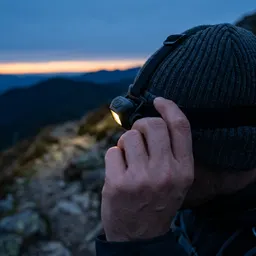 Amazon Basics headlamps (2-pack)
Red-light mode for dawn starts and walking back after dusk
-
 Compact 12x25 binoculars
Watch the first light or last glow from a ridge
-
 Sunrise wake-up light alarm clock
Wake with the sun's schedule, even when it rises early
Helps keep the tools free. ✨
Images are for illustration only. As an Amazon Associate I earn from qualifying purchases.